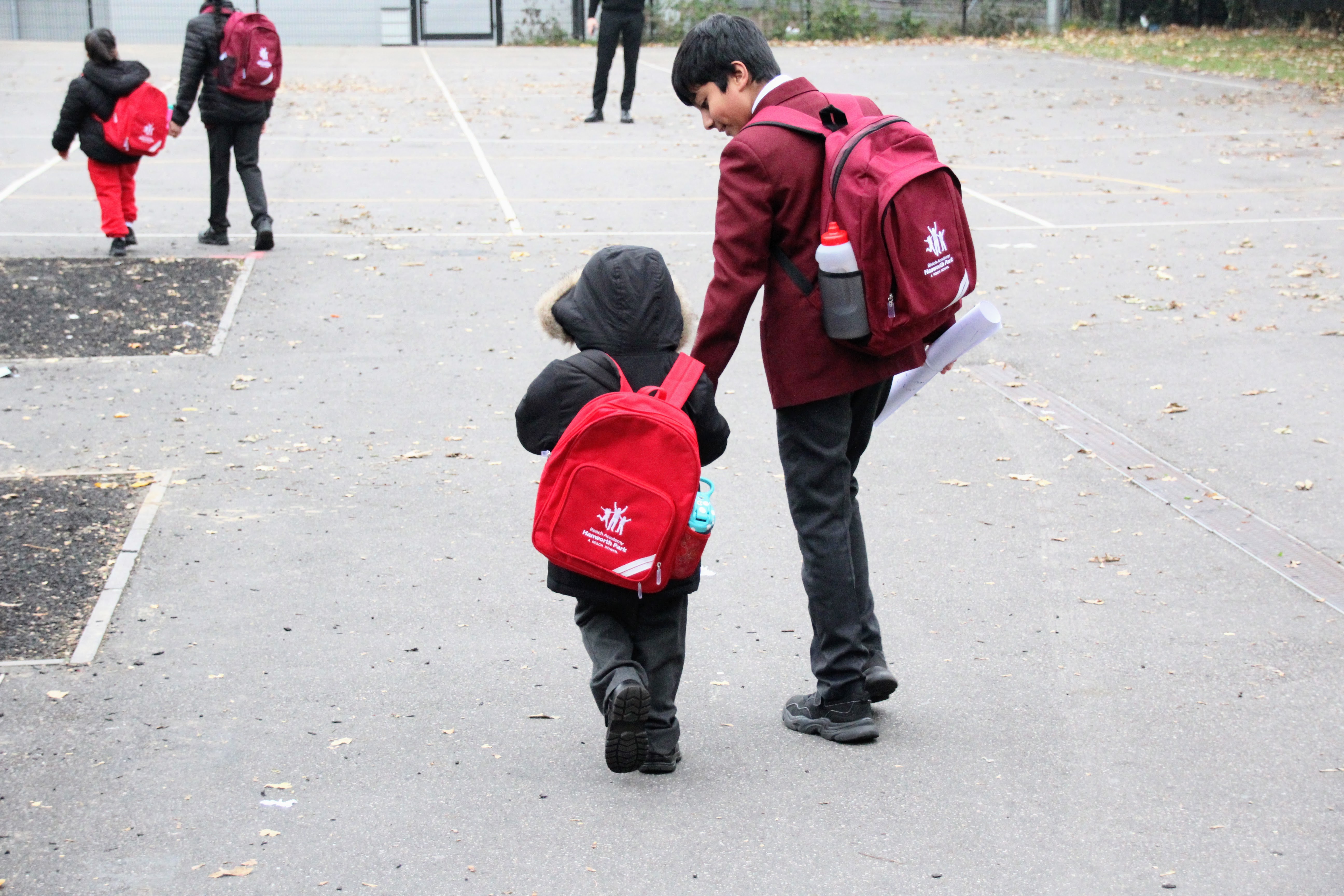
Co-headteacher Louis Everett talks about how we’ve established a positive, coherent culture at Reach Academy Hanworth Park

Reach Academy Hanworth Park (RAHP) opened its doors to pupils for the first time in September 2024. Sixty reception children, and another 90 year 7 children joined our founding team of eleven teachers. This September we welcomed 90 reception and 90 year 7s and we will continue to do the same each year until we reach full capacity in 2030.
Culture sets the tone
Culture sets the tone for how pupils behave, how staff interact, and how families feel about the community they’re joining. It is the web of social norms, values, and daily habits that shape what is seen as “normal” in the school. When pupils see kindness, respect, and high expectations modelled every day, they quickly internalise those behaviours and practise it themselves, which is what we have set out to do. Here’s how we deliberately built a strong, positive school culture from day one:
1. Our vision and values are core to everything we do
At the heart of any successful culture is a clear vision. At Reach Academy Hanworth Park, this vision is for every child to gain the skills, knowledge and attributes to enjoy a life of choice and opportunity and it informs everything we do. The school’s Reach values – Respect, Endeavour, Aspire, Courage, and Have Fun – act as the social norms everyone commits to.
Culture cannot be left to chance. Staff explicitly teach and model behaviour so that children understand what “excellence” looks like, rather than assuming they will just pick it up. Our values are lived and referred to every day and not just written on our website and walls.
We clearly articulate to our pupils how they can be ‘obviously kind’, what the power of ‘marginal gains’ is and why it’s important to take on ‘collective responsibility’.


2. Relationships matter
Positive culture does not stop at the school gates. We build relationships and collaborate with our community to ensure our school atmosphere, daily interactions and pupil behaviour are leading the way to them thriving academically and developing the soft skills that will provide a life of choice and opportunity. One of the most powerful tools RAHP uses (and our sister school RAF does too) are home visits before children join our school. Our teachers have visited the homes of every reception, year 1, year 7 and year 8 pupil that is currently at the school, getting to know them and their families in their home environment enables us to understand who they are, and how we can best support them in transition. Vitally it provides a space for us to share our expectations, so everyone is starting to work as a team even before the child arrives at school for the first time.

During these visits, staff spend time with each family, explaining the “why” behind our routines and expectations. Parents, pupils, and teachers all make commitments to each other. For example:
- Parents commit to supporting healthy routines at home.
- Pupils commit to listening carefully in lessons and striving for their best.
- Teachers commit to nurturing each child’s potential.
We all sign commitments to do ‘whatever it takes’ to ensure the young person goes on to enjoy a life of choice and opportunity. As our families understand the rationale behind systems like detentions, classroom routines or uniform expectations, there is stronger buy-in and fewer conflicts later on.

3. We’re rigorous in our preparation and planning
Our Summer School ensures pupils begin September fully prepared. Over three days in July, children learn every routine: greeting each other when entering a classroom, what to do when asked a question by a teacher, reading expectations and lunchtime conduct to name a few. The emphasis is not on avoiding bad behaviour, but on flourishing and enjoying learning, while being kind, taking pride in effort, and striving for excellence.
For pupils arriving from dozens of different primary schools, this induction creates consistency and clarity. By the time the first term begins, they know exactly what is expected, reducing stress for them and the potential of disruption in the classroom. We have seen the success of this at Open Events for current year 6s looking at Secondary Schools: although our year 7s had been here just two weeks, behaviour and routines were exemplary as prospective parents and their children did tours of the school.

For our teaching team, even before the children arrive in September, we dedicate three INSET days to practising our routines and habits to ensure everyone is on the same page and modelling that consistent culture. During Summer School, new teachers observe how more established staff members maintain discipline, and then they gradually take over.
We, as a staff body, support each other with shared reflection, regular training, and a relentless focus on values and our shared vision. It helps ensure our positive culture stays strong.
4. We coherently use shared language
A strong culture relies on shared language across staff and pupils. At RAHP, teachers and children use consistent terms like “Teammates,” “BHAGs” (Big Hairy Audacious Goals), and hand signals to communicate and reinforce expectations. This language is explained during Summer School and we commit to our personal goals for the term and year ahead.
This common vocabulary builds unity and removes ambiguity. Pupils know what behaviours matter, staff speak with professional warmth, and kindness is made explicit. Over time, the language grows with our community, becoming richer and more embedded and another of our norms.

5. We focus on marginal gains
Big transformations come from small, consistent habits. The idea originally comes from the world of sport, in particular the cycling teams that have achieved spectacular wins at the Tour de France. The idea of marginal gains is taught to our pupils from the very start: getting to lessons quickly, bringing equipment daily, paying attention to every explanation. Being organised and focussed expands the time they can spend learning, which will ultimately help them to achieve that life of choice and opportunity. Over years, these small details add up to significant learning time gained and stronger knowledge built.
Why Culture Matters
Behaviour and culture are not add-ons, they are the foundation of academic success. When pupils feel safe, respected, and part of a purposeful community, they thrive. Attendance rises, engagement deepens, and achievement follows.
As one leader put it: “A values-driven social norm of exceptional behaviour is fundamental to a really successful organisation.”
Creating a positive culture is about far more than rules or systems. It’s about deliberately shaping the daily habits, relationships, and expectations that define the community.
With clear values, strong family partnerships, explicit teaching of behaviour, and consistent reinforcement, schools can lay the foundations for pupils not just to succeed academically, but to flourish as scholars and go on to enjoy lives of choice and opportunity.
Find out more at Reach Out!
If you would like to see more of what we do at Reach Schools, look here. Reach Out is our fantastic community of educators where we share, collaborate and grow together.